
8 posts tagged with "Full Stack"

Full-stack development

View All Tags

Open Plugins: The Plugin Standard for AI Coding Tools

· 18 min read
Booker Zhao
AI Full-Stack Engineer / CloudBase AI ToolKit Author

One plugin standard, shared across seven tools.
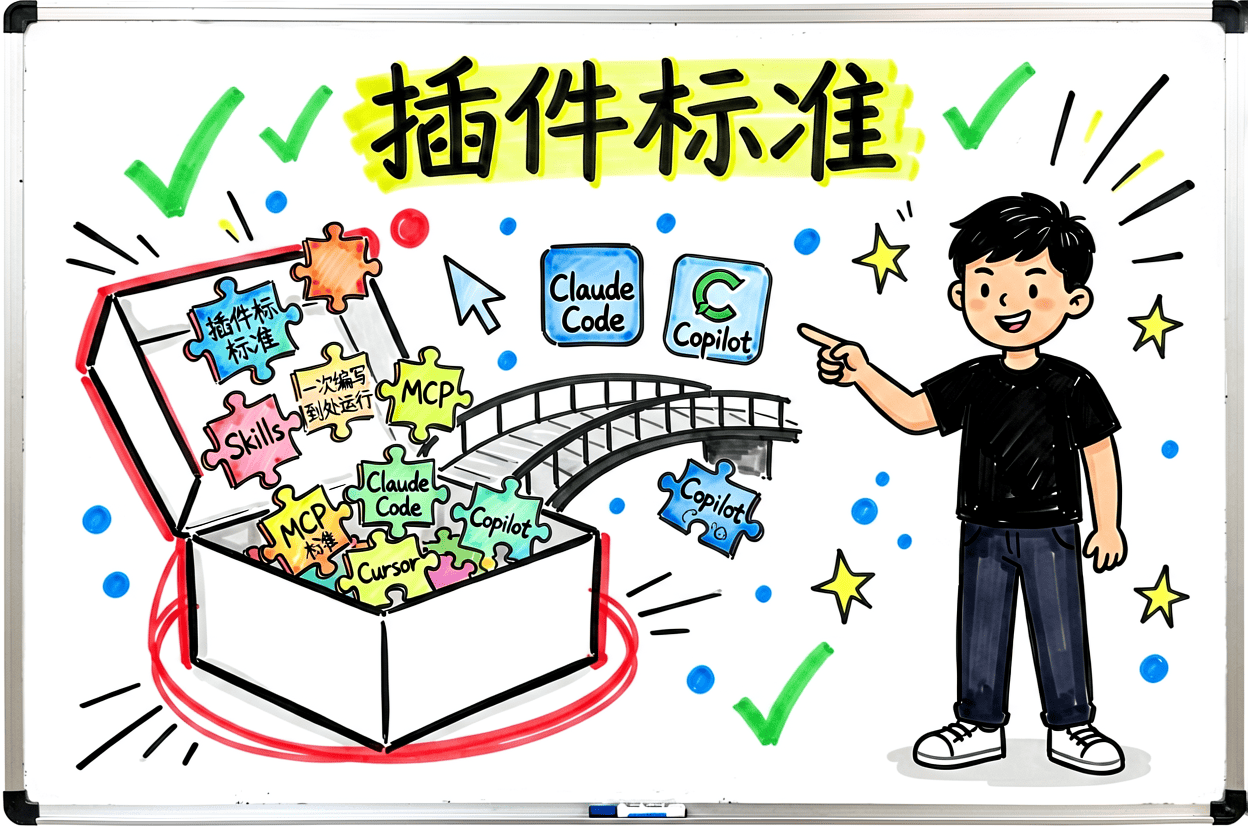
Fig: Open Plugins — install once, works across seven tools

AI coding tools are multiplying: Cursor, Claude Code, Codex, Grok Build — each with its own plugin format. Then came Open Plugins.

It's an open standard maintained by Vercel Labs. Install one plugin, it runs across seven tools.
Building a mini program with AI: from registration to submission, every step I actually walked through

· 8 min read
Booker Zhao
AI Full-Stack Engineer / CloudBase AI ToolKit Author

To be honest, I rarely think a "perk" is worth a dedicated post. This one is different.

In July 2026, three things lined up:

  • WeChat DevTools opened up AI agent Skills, so the Cursor / Claude Code you use can directly read DevTools console logs, look at simulator screenshots, auto-deploy cloud functions.
  • The mini program growth plan's second phase bumped Token from 100M to 1B, image generation from 10K to 100K, and upgraded the model to Hunyuan Hy3.
  • CloudBase flattened the backend — AI tools connect directly to its models, Token comes out of your plan, and you can deploy right after writing.

Put together, the hardest hurdles to "one person building a complete mini program alone" were all cleared. Below is my hands-on note. I walked every step, and I'll tell you what's good and what's not.

Codex grew 7x in 6 months and non-programmers are using it — here's how to go from zero to deployed multiplayer game

· 6 min read
Booker Zhao
AI Full-Stack Engineer / CloudBase AI ToolKit Author

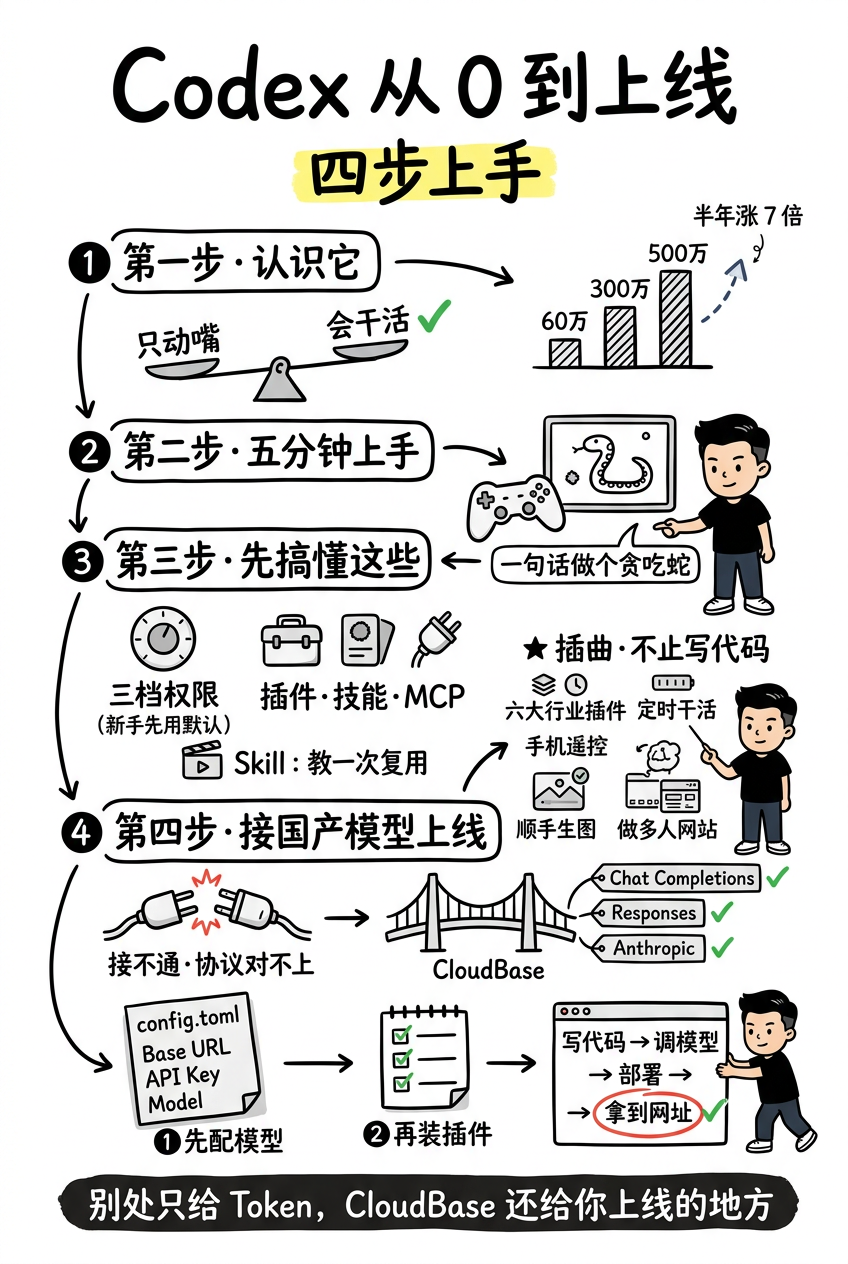
This article covers four things: ① What Codex is and what it can do → ② Five-minute hands-on: build a playable game → ③ Core usage and features → ④ Connect low-cost Chinese open-source models and deploy your app so others can access it.

Short on time? Codex now supports DeepSeek, GLM, and other affordable models. Want to save money + one-click deploy? Jump to Step 4 and copy one config. Want the full picture? Read on.

Codex at a glance: from what it is, to configuring models, installing plugins, and deploying

Adding AI to a mini program: how to keep API keys safe and switch models

· 5 min read
Booker Zhao
AI Full-Stack Engineer / CloudBase AI ToolKit Author

A question I get a lot: how do you add AI to a mini program?

Most people asking aren't stuck on the coding. They're stuck on the concrete parts: where to put the API key safely, why the mini program can't call the model API directly, how streaming replies work, whether switching models is a hassle.

This post covers the pitfalls I hit and the standard way I do it now. The core idea is one sentence: let the cloud platform be the middleman — the frontend never touches a secret key.

Vibe Coding isn't a myth: non-developers can build real apps with AI too

· 6 min read
Booker Zhao
AI Full-Stack Engineer / CloudBase AI ToolKit Author

Ever run into this: AI generates your app, then it breaks and you don't even know what question to ask? AI gives you N solutions but you have no idea which one is right?

This is the pain point for many non-technical people using AI to code:

  • Debug hell: page shows something wrong, but no idea which layer is the issue (frontend? backend? deployment?)
  • Can't ask the right question: don't know how to describe the problem so AI understands and gives accurate answers
  • Unclear learning path: know you need some basics, but don't know where to start or what's enough

Today I'll share a systematic approach — from foundational concepts to debugging techniques to backend solutions — to take you from "able to generate apps" to "able to build real, usable apps."

Why does your AI code always need rework? SBE methodology has the answer

· 5 min read
Booker Zhao
AI Full-Stack Engineer / CloudBase AI ToolKit Author

After a few months of coding with the Spec workflow, I kept asking myself one question: why does this "write requirements first, design next, then break down tasks" process actually work?

Then I came across Gojko Adzic's Specification by Example: How Successful Teams Deliver the Right Software, and it clicked. Behind Kiro's Spec workflow is exactly the SBE (Specification by Example) methodology. This article explains the relationship between the two — and why your AI coding keeps ending up in rework.

AI coding without luck: the complete guide to replicating Kiro's Spec workflow

· 7 min read
Booker Zhao
AI Full-Stack Engineer / CloudBase AI ToolKit Author

After more than a year of AI-assisted coding, my biggest lesson is this: vibe coding feels great in the moment, but it falls apart the moment a project gets complex. A one-line requirement, AI starts coding on its own assumptions, and what comes out is always a bit off. You ask it to fix something, it fixes that and breaks something else. A few rounds of this and your codebase has tripled in size while the number of working features barely grew.

Eventually I figured it out: the problem isn't that AI writes bad code. It's that I don't say clearly what I want.

Kiro's Spec workflow is built to solve exactly that. Let's walk through it from scratch.